As the trend of financial decoupling between the United States and China intensifies, is foreign capital quietly withdrawing?
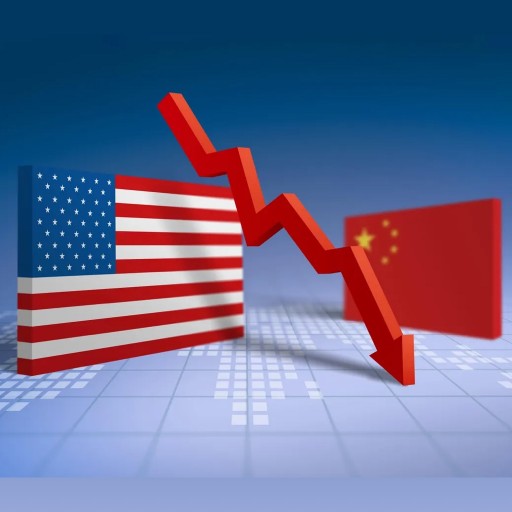
In recent years, the trend of financial decoupling between the United States and China has intensified, becoming the focus of global financial markets. The United States has tried to cut off its financial ties with China through a series of policy measures to maintain its global financial hegemony.
However, whether this trend will lead to a large-scale withdrawal of foreign capital from China has become a hot topic in the market.
This article will start with the current situation, causes and impacts of financial decoupling between the United States and China, and deeply analyze the dynamics of foreign capital in the Chinese market to provide valuable reference for investors and policymakers.
The current situation and causes of financial decoupling between the United States and China
The current situation of financial decoupling between the United States and China
The trend of financial decoupling between the United States and China is mainly reflected in multiple levels such as policies, markets, institutions and currencies.
At the policy level, the United States has tried to cut off the international financing channels of Chinese companies through means such as the upgraded version of the Foreign Companies Accountability Act (HFCAA), restrictions on pension fund investment in China, and review of audit working papers of Chinese concept stocks.
At the market level, the United States has promoted the delisting of Chinese concept stocks from the United States, making it more difficult for Chinese concept stocks to raise funds in the United States.
At the institutional level, the United States has set restrictions or increased barriers to Chinese institutional investment, hindering two-way investment between China and the United States. At the monetary level, the United States attempts to exclude China by building a financial safety net and weaken the international status of the RMB.
Reasons for the financial decoupling between the United States and China
The reasons for the financial decoupling between the United States and China are complex and diverse, mainly including the following aspects:
Geopolitical factors: The United States regards China as a strategic competitor and attempts to curb China's development through financial means.
Economic interests: The United States attempts to maintain its global financial hegemony and ensure the status of the US dollar as the main international settlement currency.
Technological competition pressure: The United States is concerned about China's rapid development in key technology fields such as semiconductors and artificial intelligence, and attempts to restrict China's acquisition of key technologies through financial means.
Dynamic analysis of foreign capital in the Chinese market
The actual use of foreign capital and the number of newly established enterprises
Although the trend of financial decoupling between the United States and China has intensified, foreign capital has not withdrawn from China on a large scale.
According to data released by the Ministry of Commerce, in 2024, the actual use of foreign capital in China decreased by 27.1% year-on-year, but the number of newly established foreign-funded enterprises increased by 9.9% year-on-year. This data shows that foreign capital still maintains a certain degree of activity in the Chinese market, but the investment structure may have changed.
Changes in the structure of foreign investment
The investment structure of foreign capital in the Chinese market is undergoing profound changes.
On the one hand, some foreign-funded enterprises in low-end industries may withdraw from China due to rising costs and intensified market competition; on the other hand, foreign-funded enterprises in high-tech industries, service industries and other fields are showing a rapid growth trend.
For example, the actual use of foreign capital in the medical equipment and instrument manufacturing industry, professional technical services industry, and computer and office equipment manufacturing industry increased by 98.7%, 40.8% and 21.9% respectively.
Foreign capital's confidence in the Chinese market
Despite the intensification of the trend of financial decoupling between the United States and China, foreign capital's confidence in the Chinese market has not weakened. As one of the world's largest consumer markets, China has the advantages of a super-large market, rich innovative application scenarios, and abundant high-quality talents.
These advantages have attracted a large number of foreign-funded enterprises to continue to invest and start businesses in the Chinese market. For example, Walmart Sam's Club opened its 52nd store in Wenzhou, Zhejiang, and Walmart's net sales in China increased by 17% year-on-year in the third quarter of 2024.
Impact of US-China financial decoupling on foreign capital flows
Short-term shock and long-term adjustment
The US-China financial decoupling may have a certain impact on foreign capital flows in the short term. For example, the US's promotion of the delisting of Chinese concept stocks from the US and restrictions on Chinese companies' financing in the US may cause some foreign companies to face financing difficulties and market confidence setbacks.
However, in the long run, foreign capital flows will be more affected by market laws, economic fundamentals and other factors. With the continuous development of China's economy and the continuous optimization of the market environment, foreign capital is expected to continue to seek investment opportunities in the Chinese market.
Structural adjustment of foreign capital
The US-China financial decoupling will prompt foreign capital to make structural adjustments in the Chinese market.
On the one hand, foreign capital may pay more attention to investment in high-tech industries, service industries and other fields to obtain higher returns and broader market space; on the other hand, foreign capital may also strengthen cooperation with Chinese local companies to jointly promote industrial upgrading and innovative development.
The attractiveness and resilience of the Chinese market
The attractiveness and resilience of the Chinese market are important guarantees for the continued inflow of foreign capital. China has a super-large market advantage, a complete industrial system and abundant human resources, which provides a broad space for development for foreign-funded enterprises.
At the same time, the Chinese government has also taken a series of measures to optimize the business environment and strengthen intellectual property protection, providing a more stable and predictable investment environment for foreign-funded enterprises.
Case Analysis
Walmart's layout in the Chinese market
As a world-renowned retail company, Walmart has maintained a steady development trend in the Chinese market. Despite the challenges of e-commerce impact and consumption upgrading, Walmart continues to expand its market share in China by adjusting its strategy and optimizing its layout.
For example, the number of Walmart Sam's Club stores in the Chinese market continues to increase, and sales continue to grow. This shows that foreign-funded enterprises still have strong competitiveness and adaptability in the Chinese market.
Investment trends of high-tech foreign-funded enterprises
In recent years, the investment trends of high-tech foreign-funded enterprises in the Chinese market have attracted much attention.
Although the United States has continuously strengthened its export controls on China in key technology fields such as semiconductors and artificial intelligence, some high-tech foreign-funded enterprises still choose to increase their investment in the Chinese market.
For example, some internationally renowned semiconductor companies have set up R&D centers or production bases in China to obtain more market opportunities and technical resources. This shows that foreign-funded enterprises remain optimistic about the long-term development prospects of the Chinese market.
Foreign response strategies under the financial decoupling between China and the United States
Facing the trend of financial decoupling between the United States and China, foreign-funded enterprises have adopted a variety of response strategies.
On the one hand, foreign-invested enterprises strengthen cooperation with Chinese local enterprises to jointly promote industrial upgrading and innovative development; on the other hand, foreign-invested enterprises also actively seek diversified financing channels and market opportunities to reduce their dependence on a single market.
For example, some foreign-invested enterprises choose to go public in international financial centers such as Hong Kong and Singapore to avoid the risks of the US market.

Future Trends and Countermeasures of US-China Financial Decoupling
Future Trends
The future trend of US-China financial decoupling may present the following characteristics:
Policy level: The United States may continue to introduce more restrictive measures to try to cut off financial ties with China.
Market level: There may be a certain degree of separation in the financial markets of China and the United States, but the possibility of complete decoupling is small.
Institutional level: Cooperation between Chinese and American financial institutions may be subject to certain restrictions, but multinational financial institutions will still seek cooperation opportunities worldwide.
Currency level: The process of RMB internationalization may be accelerated to reduce dependence on the US dollar.
Countermeasures
In response to the future trend of US-China financial decoupling, China should adopt the following countermeasures:
Strengthen policy communication and coordination: Strengthen policy communication and coordination with the United States and other Western countries to promote the establishment of a more stable and predictable international financial order.
Optimize the business environment: Continue to optimize the business environment, strengthen intellectual property protection, etc., to provide a more stable and predictable investment environment for foreign-funded enterprises.
Promote industrial upgrading and innovative development: Strengthen scientific and technological innovation and industrial upgrading, and enhance China's position and competitiveness in the global industrial chain.
Strengthen international cooperation: Actively participate in global financial governance and international cooperation, and promote the construction of a more open, inclusive, inclusive, balanced and win-win international financial system.
Conclusion and Outlook
Research Conclusion
The intensified trend of financial decoupling between the United States and China has not led to a large-scale withdrawal of foreign capital from China. On the contrary, foreign capital has shown new characteristics of structural adjustment and high-quality development in the Chinese market.
The attractiveness and resilience of the Chinese market are important guarantees for the continued inflow of foreign capital. In the future, with the continued development of China's economy and the continuous optimization of the market environment, foreign capital is expected to continue to find investment opportunities in the Chinese market.
Future Outlook
Looking ahead, the trend of financial decoupling between the United States and China may continue to exist, but the possibility of complete decoupling is small.
China should continue to strengthen policy communication and coordination, optimize the business environment, promote industrial upgrading and innovative development, and strengthen international cooperation to cope with the challenges and opportunities brought about by financial decoupling between the United States and China.
At the same time, foreign-invested enterprises should also actively adjust their strategies, optimize their layout, strengthen cooperation with local Chinese enterprises and other measures to achieve sustainable development in the Chinese market.
 1
1 1
1OTHER NEWS
-
- How much longer can the seven tech giants of the US stock market withstand high interest rates?
- By ZXY 28 Jul,2025

-
- What do you Mean by Mortgage? What Does it Mean to Have a Mortgage?
- By Little Grapes 24 Apr,2023

-
- Do small businesses really need tax services? When can they file their own taxes?
- By YCY 27 Jan,2026

-
- How much longer can the eurozone hold out? The ECB has reached the end of its rate hike cycle
- By ZXY 01 Aug,2025
-
- Gold surges to a new all-time high—what are investors afraid of?
- By ZXY 29 Jul,2025

-
- Fixed deposits are not as good as flexible financial management? Analysis of financial management trends in 2025
- By ZH 24 Jul,2025

-
- Who is the Primary Lender When Applying for a Home Loan? These Points are Important!
- By Little Grapes 24 Apr,2023

-
- Should you Choose a Real Estate Agent When Buying a Home?
- By Wendy 24 Apr,2023

-
- Global manufacturing is slowing down in tandem. When will deflation strike?
- By ZXY 01 Aug,2025

-
- Trump reignites tariff war, global supply chains face another shakeup
- By ZXY 28 Jul,2025
-
- How do I Choose Between Selling my Home and Renting it out?
- By Wendy 24 Apr,2023

-
- High-yield stocks vs. growth stocks: Which type of investment is more resistant to risks? A game of wealth defense and offense
- By ZH 23 Jul,2025