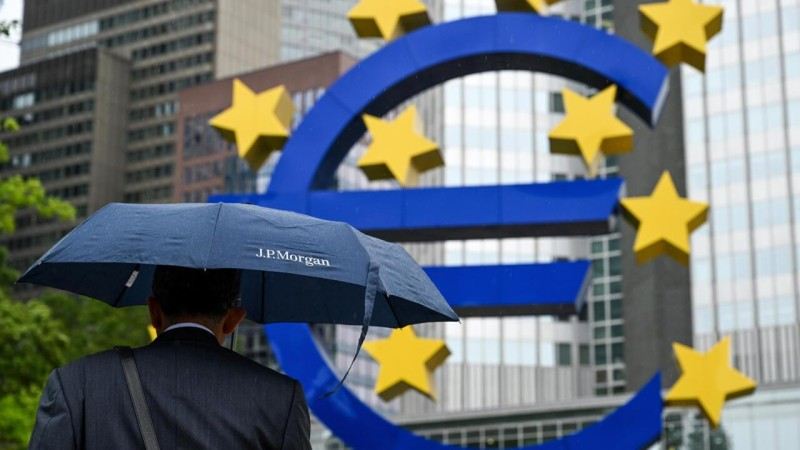
European stock market downturn: investment risks under the dual pressure of geopolitics and inflation
In the first half of 2025, European stock markets performed weakly overall. Although some industries have stabilized, most major stock indexes remain in a range of fluctuations. Whether it is the German DAX index, the French CAC40, or the pan-European Stoxx 600 index, it is difficult to get rid of the trend of downturn.
The main reason behind this is not only that the economic data is not as good as expected, but also the systemic risk posed by geopolitical uncertainty and the continued pressure of high inflation.
The geopolitical situation in Europe has continued to be tense in recent years, especially in the context of the prolonged war in Ukraine and the continued game of energy structure between Russia and Europe, the political and market confidence in the entire region has been continuously eroded.
At the beginning of 2025, as the military conflict on the border of Eastern Europe heated up again, the confrontation between NATO and Russia caused investors to turn to safe-haven assets again. Political turmoil is not limited to the periphery of the European Union.
Some core countries are also facing domestic election risks, fiscal reform deadlocks, and frequent social protests, which further weakened the confidence of capital in allocating to Europe.
At the same time, inflationary pressure has not been significantly alleviated as expected. Although energy prices have fallen from their 2022 peak, rising service costs, wage inertia, and structural price rigidities such as food and housing have kept core inflation above the ECB's target.
Against this backdrop, the ECB's monetary policy flexibility is limited. Although the market once expected the interest rate cut cycle to start in the middle of the year, the central bank has repeatedly sent hawkish signals, emphasizing that anti-inflation remains the primary goal. As a result, financial markets are facing the dual pressures of high interest rates and weak growth.
More importantly, high interest rates pose a clear challenge to corporate profitability, especially for small and medium-sized enterprises that rely on debt financing and cyclical industries such as manufacturing, real estate and retail sectors.

In the first quarter of 2025, many large European listed companies issued financial report warnings, forced to lower their earnings expectations, and squeezed shareholder returns, further affecting investors' risk appetite.
In such a profit environment, even if the valuation level is more attractive than that of US stocks, funds are more inclined to flow back to US dollar assets and safe-haven instruments.
Capital flow trends also reflect changes in market sentiment. According to recently released fund flow data, European stock funds have experienced net outflows for several consecutive months, while the US technology sector and Japanese stocks have attracted more foreign investment attention.
Although emerging markets are under pressure overall, they still show relative resilience in some energy and commodity exporting countries. In contrast, European assets appear marginalized in long-term layouts, especially in the allocation of large international assets, where their weights are gradually reduced.
The disadvantages in industry structure also restrict the growth potential of European stocks. The industrial, financial and traditional consumer goods sectors in European stocks have high weights, while high-growth and high-valuation technology sectors are relatively scarce.
Although there have been breakthroughs in semiconductors, new energy vehicles and green energy, the overall innovation capabilities and market size are still difficult to compare with those of American technology giants. In an environment where funds prefer high-growth assets, the attractiveness of European stocks is naturally discounted.
For long-term investors, the current European market is full of challenges. On the one hand, valuations are indeed relatively low, and some leading companies have stable cash flows and a good dividend history, which theoretically have medium- and long-term allocation value.
But on the other hand, political uncertainty, weak economic growth and unfavorable trends in global capital flows have significantly increased market volatility in the short term. If investors lack in-depth judgment of geopolitical risks and policy paths, they may find it difficult to control the current market situation.
In addition, the weakening of the euro exchange rate also brings additional hedging costs to international investors denominated in US dollars. In a high interest rate differential environment, the euro continues to be under pressure relative to the US dollar, which means that even if European stocks generate certain returns, exchange rate factors may offset some of the returns.
This factor further limits the attractiveness of European assets in global portfolios.
For institutional investors, it may be imperative to re-examine their asset allocation strategies in Europe. What the market needs now is not only a short-term technical rebound or policy easing signals, but also positive signals from the macro level, such as a significant decline in inflation, geopolitical easing, or structural growth momentum in the European economy.

Otherwise, investors will continue to waver between safety margins and potential returns.
The downturn in European stock markets is not an isolated incident, but the result of the combined effects of global capital flows, macro policy paths and political trust systems.
Against the backdrop of the Federal Reserve maintaining high interest rates, the European Central Bank has limited monetary policy space, and fiscal policy is difficult to expand on a large scale under the high debt burden, making the overall economic recovery momentum in Europe weak.
The market performance under this situation reflects more of a collective wait-and-see attitude of global investors towards the future development of Europe.
Despite this, some market segments still show a certain degree of resilience. For example, green energy and climate technology companies have benefited from the EU's long-term strategic policies and attracted some thematic investment funds.
Medical technology and high-end manufacturing are also maintaining growth momentum in the path of seeking technological breakthroughs and cross-border cooperation. However, these highlights are not enough to change the overall market atmosphere. Investors generally choose to maintain a defensive posture and wait for clearer trend signals.
In summary, the investment risks currently faced by European stocks are multi-layered, not only with structural challenges of geopolitics and inflation, but also with inherent limitations of institutions, industries and policy tools.
In the current environment, investors need to be more cautious in assessing risk premiums, diversifying asset allocations, and being highly sensitive to macro factors. In a global capital market with increasing volatility, Europe is no longer a symbol of stable growth, but is gradually evolving into a strategic choice point with intensive uncertainty.
 1
1 1
1OTHER NEWS
-
- Fixed deposits are not as good as flexible financial management? Analysis of financial management trends in 2025
- By ZH 24 Jul,2025

-
- How much longer can the seven tech giants of the US stock market withstand high interest rates?
- By ZXY 28 Jul,2025

-
- Can the AI sector continue to drive the tech stock rally?
- By ZXY 30 Jul,2025

-
- What does the upgraded regulation of digital currencies mean to investors?
- By ZH 25 Jul,2025

-
- Some Tips on Buying a Condo!
- By Wendy 24 Apr,2023

-
- What do you Mean by Mortgage? What Does it Mean to Have a Mortgage?
- By Little Grapes 24 Apr,2023

-
- Gold surges to a new all-time high—what are investors afraid of?
- By ZXY 29 Jul,2025

-
- "Buy Now, Pay Later" is changing the consumer finance landscape: a payment revolution spreading around the world
- By ZH 25 Jul,2025

-
- Should you Choose a Real Estate Agent When Buying a Home?
- By Wendy 24 Apr,2023

-
- Global manufacturing is slowing down in tandem. When will deflation strike?
- By ZXY 01 Aug,2025
-
- Trump reignites tariff war, global supply chains face another shakeup
- By ZXY 28 Jul,2025

-
- How much longer can the eurozone hold out? The ECB has reached the end of its rate hike cycle
- By ZXY 01 Aug,2025